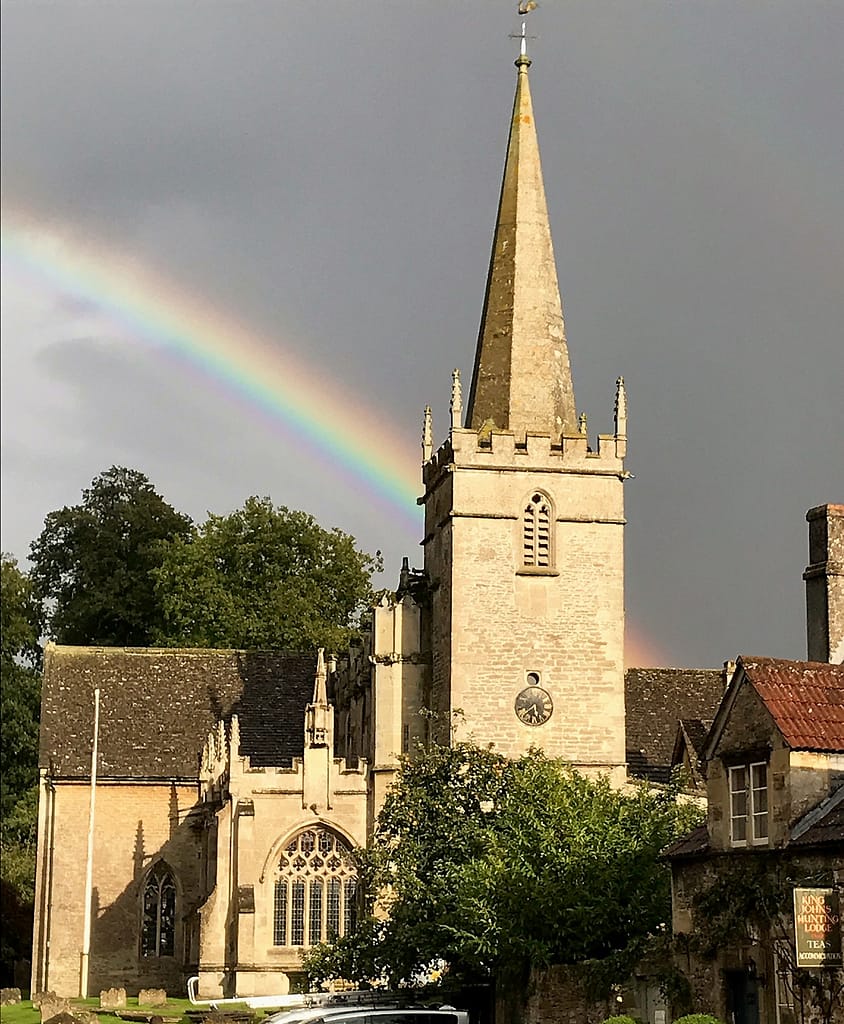
Walk through the doors of St Cyriac’s and you’re not just visiting a church—you’re travelling through time. From Norman stonework to Victorian touches, this remarkable building carries the fingerprints of centuries: Plantagenet, Tudor, Stuart, Georgian and beyond. Look closely and you’ll find clues to the people who shaped this place—those who worshipped here, those who are remembered here, and those whose stories are still waiting to be uncovered.
Explore further and you’ll uncover stories of a lost Tudor tomb, one of England’s earliest Renaissance memorials, and epic tales of naval heroes, scientists—and even traitors. Royal connections thread through the centuries too, with links to Henry VIII, Elizabeth I, Charles I and Charles II, Queen Elizabeth, the Queen Mother. And yes—there’s even a surprising connection to Thomas the Tank Engine!
Our story begins deep in the stone. This Norman church may stand on the foundations of an even earlier Saxon place of worship, but the earliest surviving features point firmly to the 11th century. St Cyriac’s was built by Edward of Salisbury—an influential landowner in Lacock—and William II of Eu of Lackham. After William II fell from favour, accused of treason against the king, the lands changed hands and came to the Bluet family.
Around 1168, the Earl of Salisbury and Ralph Bluet II agreed to share the right to appoint priests, taking turns in a system known as patronage. But in 1236, Ela Countess of Salisbury founder of Lacock Abbey and great-great-granddaughter of Edward of Salisbury—set out to bring the church into the Abbey’s care. (She had reverted back to her title as Countess of Sailsbury following her husband’s death and no longer wanted to share the patronage.) Her aim was practical as well as spiritual: securing the church’s income to support the nuns. It took time—and a little pressure. In 1312 the Bishop of Salisbury forced the issue, and John Bluet finally agreed, with conditions tied to money and prayers for the souls of his ancestors. Even then, the transfer could not be completed until the serving minister died, so the church did not finally pass to the Abbey until 1337.
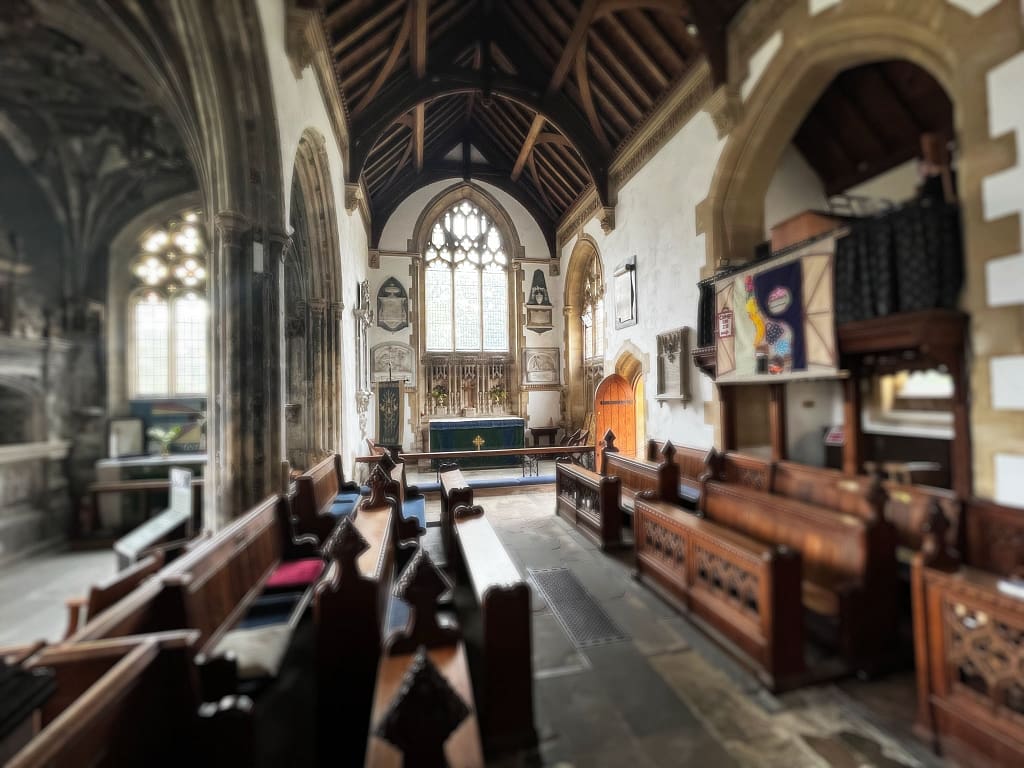
In 1430 the Bonham and Croke families added the extra side chapel, later known as the Lady (Talbot) Chapel to the church and some other re-building took place including the lower part of the tower and some work in the North Transept windows which can still be seen today.
After the Reformation when the Abbey was forced to close, the owners of Lacock Abbey as it became a house (from 1514 onwards) retained the right of patronage over St Cyriac’s—helping to appoint its priests across the centuries, right up to the present day. Although “The living” is currently suspended for this parish the current patron was still invited to attend the recruitment process of the current incumbent.
Dedicating a Church to St Cyriac is unusual in England and more commonly found in Normandy, which further suggests an original Norman style to the church but although some Norman stonework was found during restoration work in 1875 the building seen today is largely from the 1500s.
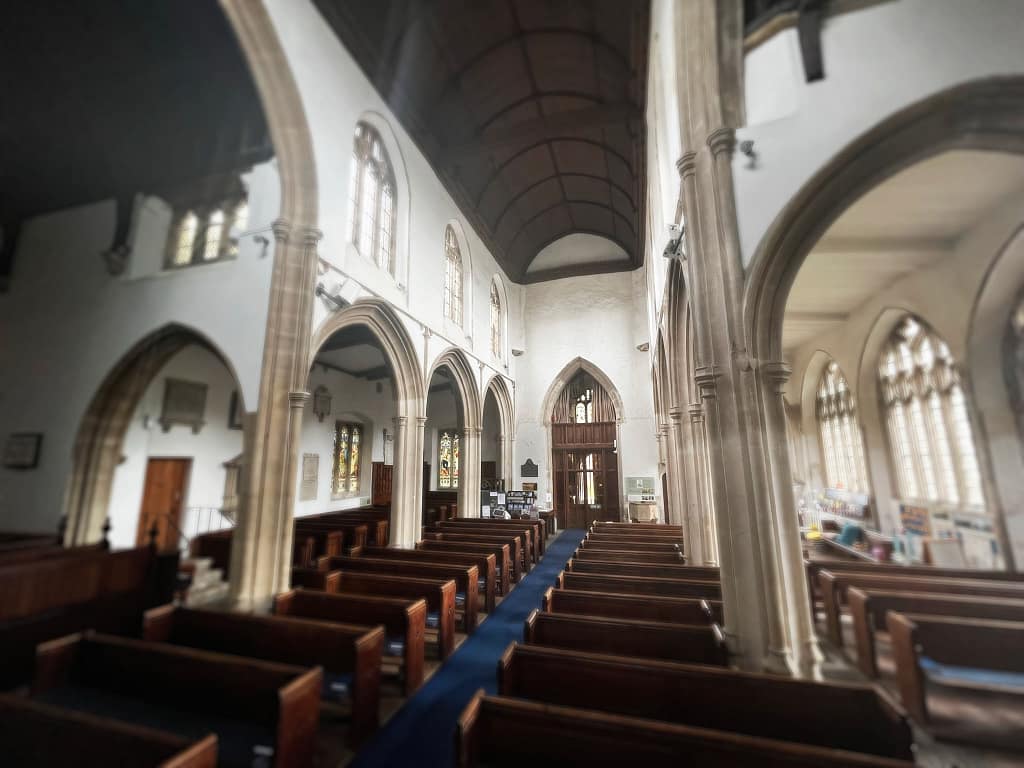
The church has been changed in many ways over the centuries in the 14th century some work was done including lower parts of the tower but the main rebuild took place in the 15th century which is when the church gained its current cross formation.
If you begin your visit in the outer porch, pause for a moment, then look up into the central panel to spot the coats of arms of two local families—the Bluets and the Baynards. It was Philip Baynard who commissioned this porch around 1522, adding his own chapter to the story written in these stones. The tower was built (or may be re-built) in 1604, the south annex or church cottage in 1619.
The oldest surviving view we have of the church is based on a sketch by Thomas Dingley which is amoungst a number of sketches he made for his book “History from Marble”. The drawings were taken some time during the reign of Charles II (1660-1685). Based around this drawing here is an impression of what it may have looked like then from the South side. You can see the Nave which is believed to have been improved by local traders due to prosperity from the wool trade is significantly higher and more impressive than the chancel and transcepts in this picture.
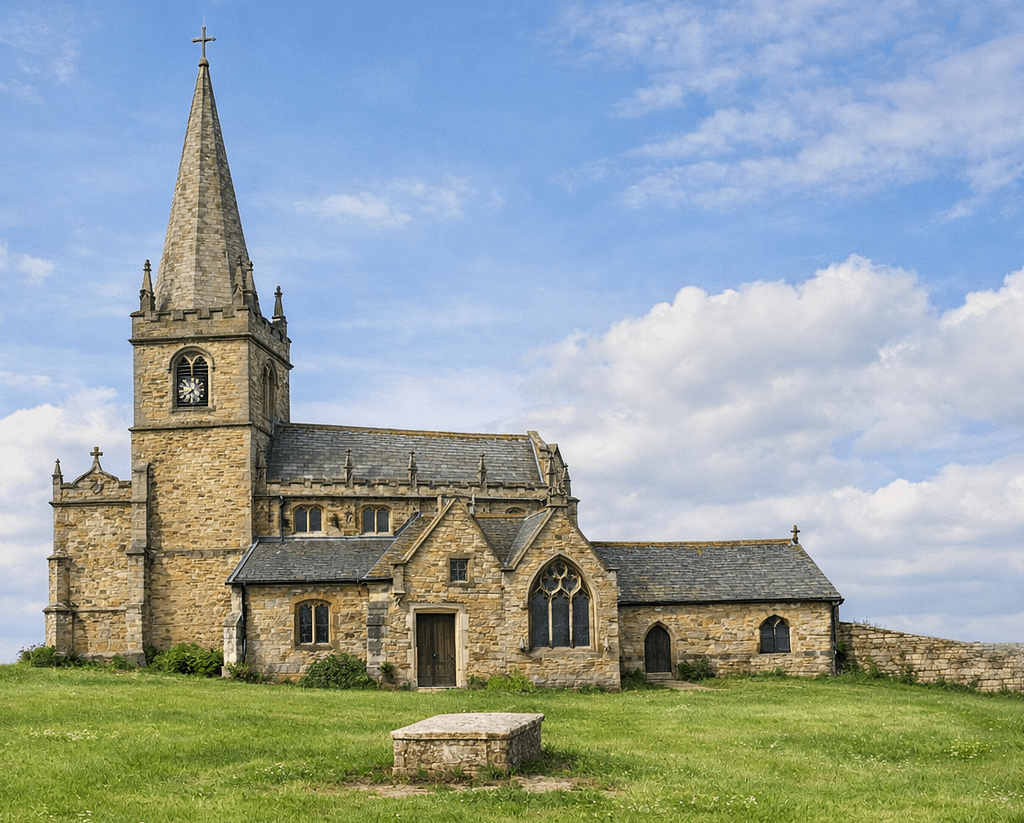
The chancel was first re-built in 1777 but it was said to not be in a style matching the rest of the building. The Banyard family later became resident at Lackham and paid for a rebuilding of the Lackham (Baynard) Aisle with a new roof, north facing pews for the Banyard family and estate workers. In 1861 during a restoration project, also funded by the Baynard family, Arthur Blomfield embarked on a massive uplifting of the transcept roofs to match the tall Nave. He also removed some galleries and the organ which was then at the west end of the church. Box pews were removed and some of the memorial stones on the floor were destroyed unfortunately and some curiously turned around as well! The font was also replaced at that time.
The chancel was re-modelled in 1902 in memory of one of Lacock’s most famous residents William Henry Fox Talbot who died in 1877. The remodelling was done by Harold Brakespeare who wanted the look to be lighter and include a dedication to William Henry Fox Talbot and was supported by William’s son Henry Fox Talbot. St Cyriac’s was the first church in the world to be photographed by William Henry Fox Talbot who lived in the village at Lacock Abbey. He was also Lay Rector for the Church which meant he had responsibility for the Chancel and entitled to receive the rectorial tithes of the Benefice and his family were Patrons for the Church. The church cottage with vestry project was completed in 1993 on the North side of the church to provide a vicar’s vestry with toilet below and a meeting room upstairs.
The Church also has connections to Awdry family related to the Rev Wilbert Vere Awdry of Thomas the Tank Engine fame. They lived locally for some years in Notton House including Wilbert’s grandfather Sir John Awdry. Created in 1904 this is seen in a large wooden memorial and two stained glass windows on the right hand side as you enter the main part of the church. A number of the Awdry’s are listed on the memorial although Rev Awdry himself is not mentiioned on it.
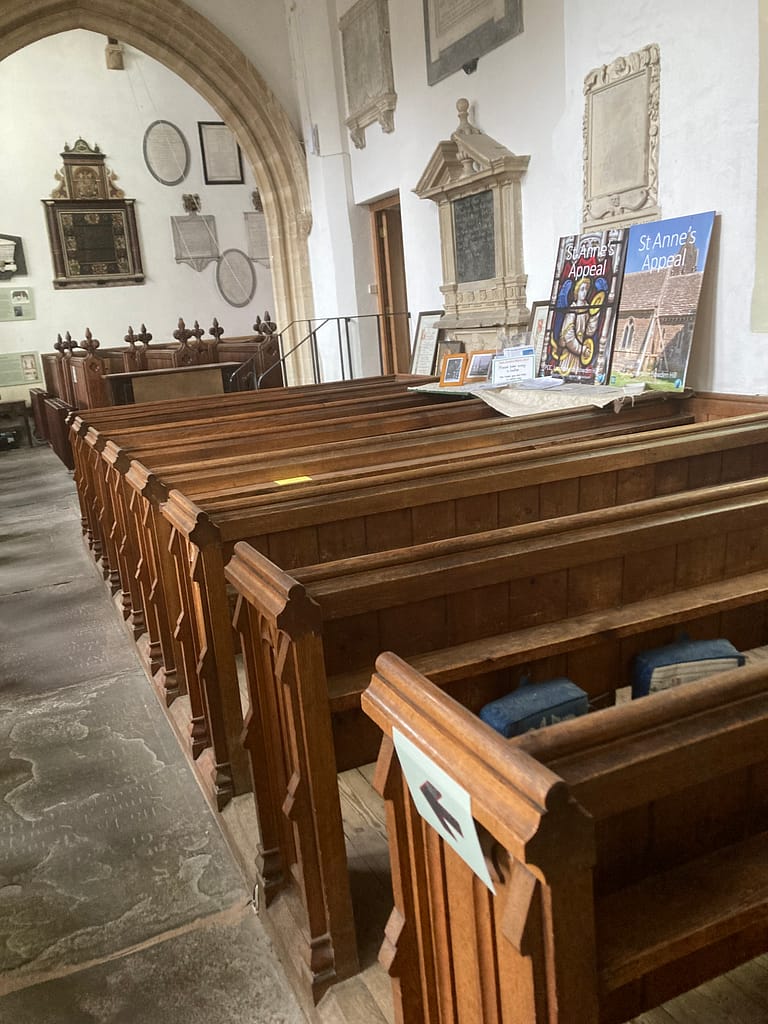
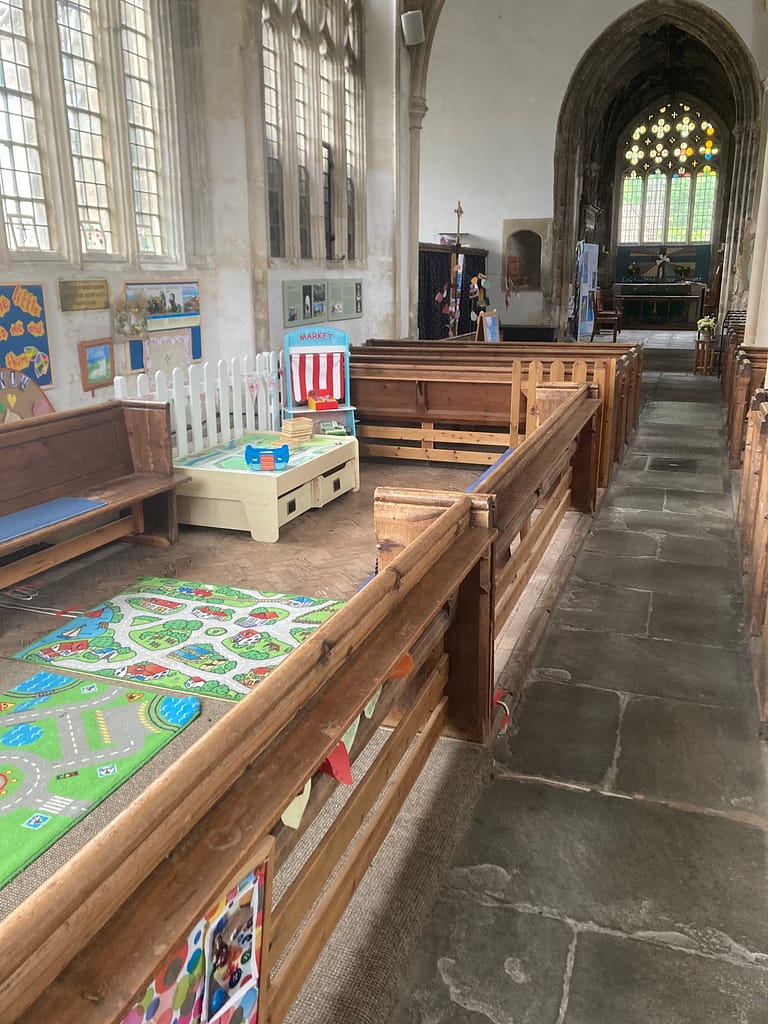
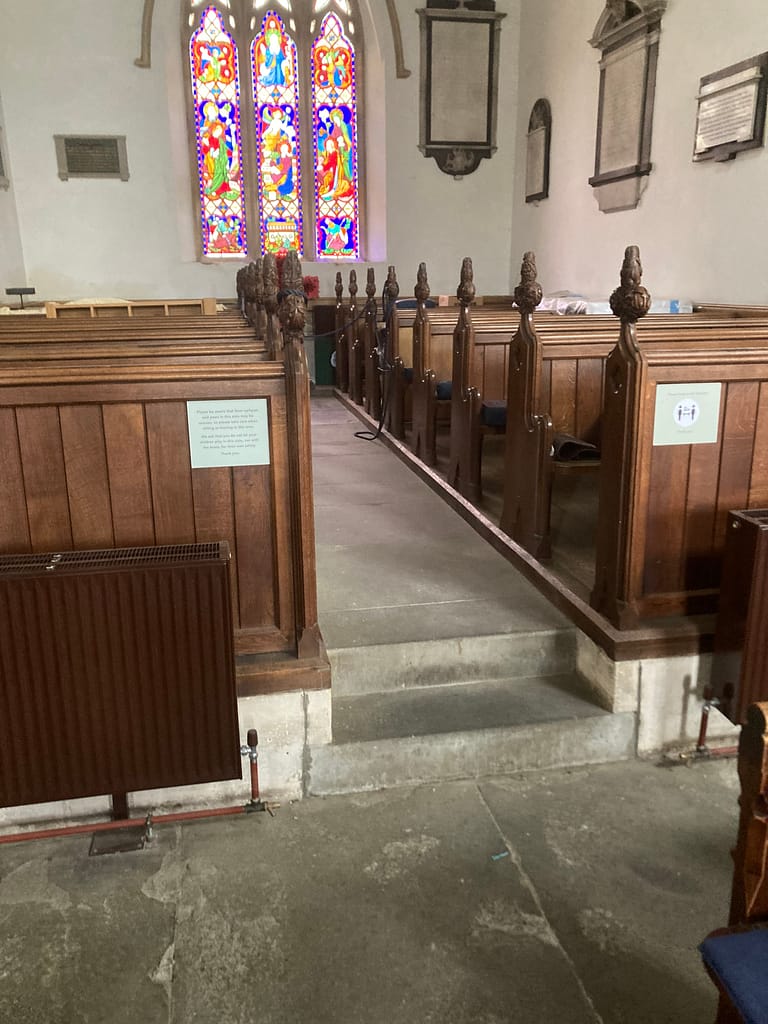
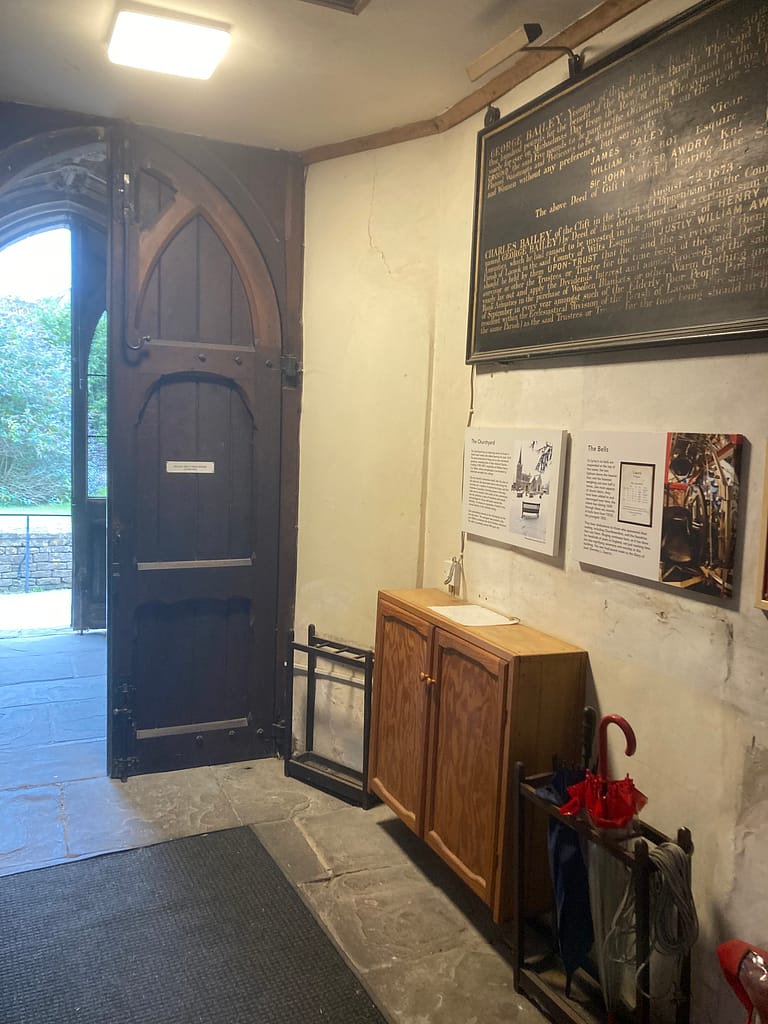
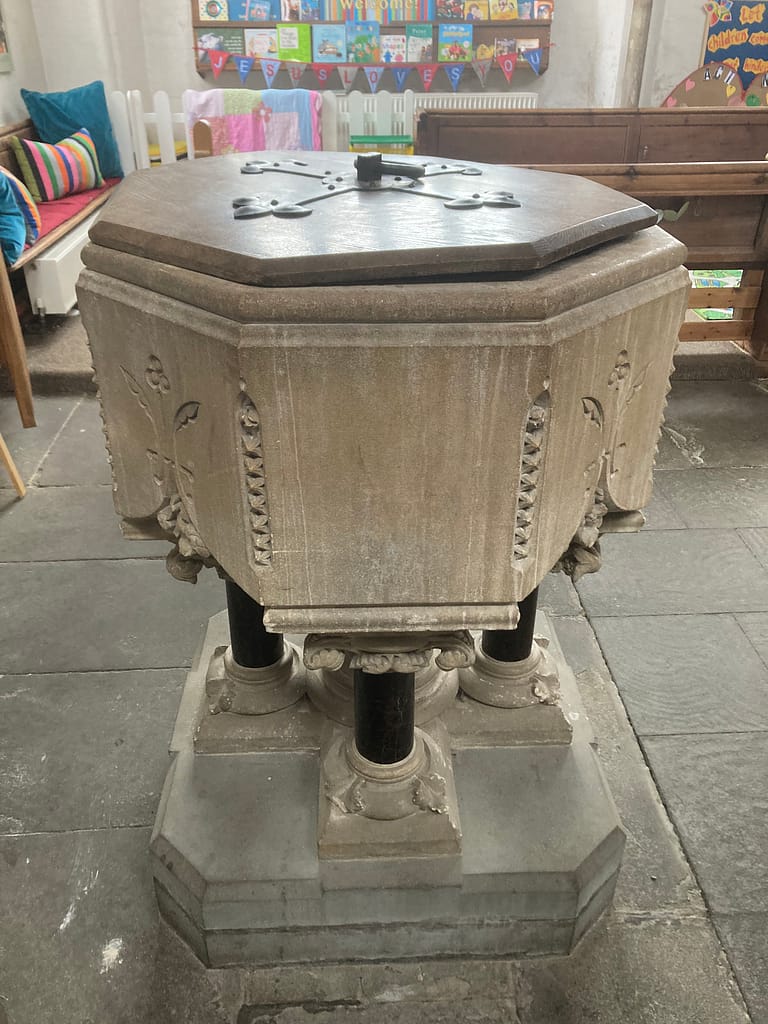
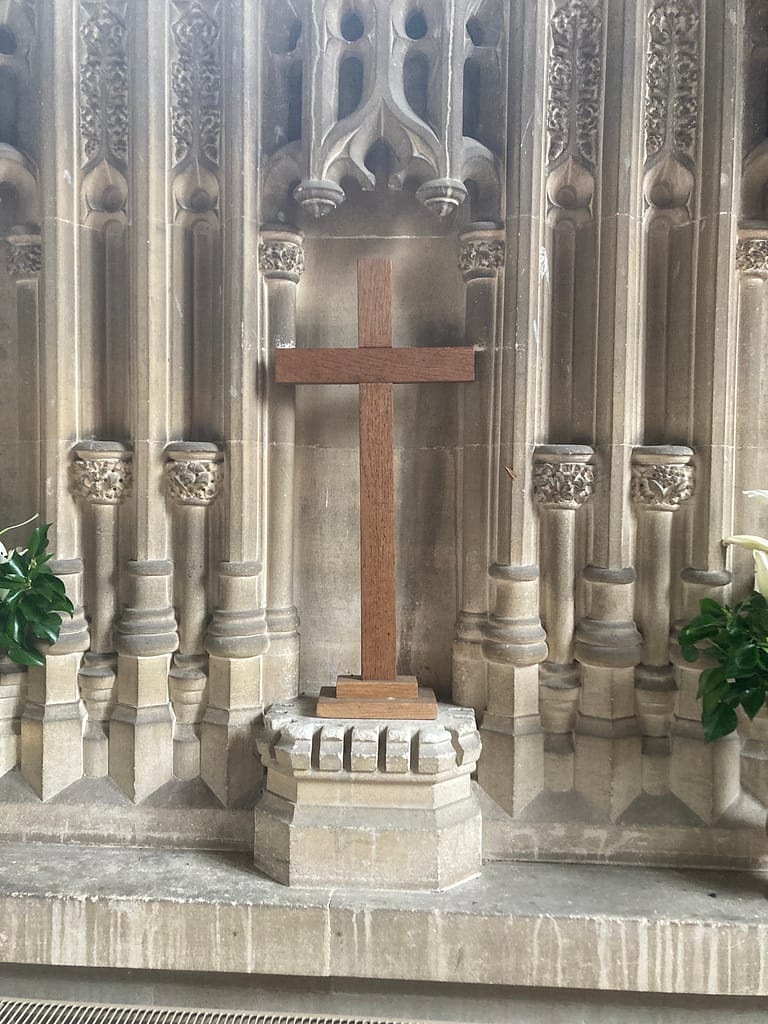
What can history tell us about this church in terms of those who are remembered and buried here? Below are links which tell the story of some of the characters you will see mentioned in our memorials both inside and outside the church.
Sir William Sharrington, whose monument is in the Lady Chapel – William Sharington
Sir John Talbot, whose monument is beside the main altar – Sir John Talbot
The Churchyard
The Churchyard was formally closed for burials in 1860 and sadly there is no full plan of burials known about at this time although we do have some records made at the end of the 1970s where an attempt was made to map the graveyard as much as possible at that time.
There are no Commonwealth War Graves in the graveyard. There is a private footpath into the back of the graveyard from Lacock Abbey via the Allottments. There is also a memorial garden where ashes can still be buried. Please note that many visitors look for the grave of William Henry Fox Talbot at the church but the churchyard was closed by the time he died. He is buried in Lacock Cemetary https://www.findagrave.com/memorial/13786704/william-henry_fox-talbot
Parish Records
The older parish records for St Cyriac’s are held at the Wiltshire History Centre in Chippenham, however we do have a transcript of what they contain held at the church for any enquiries please email info@lacockchurches.org.uk